What My Father Passed On Without Ever Speaking — And What I Understood Too Late
By Zara Lumis
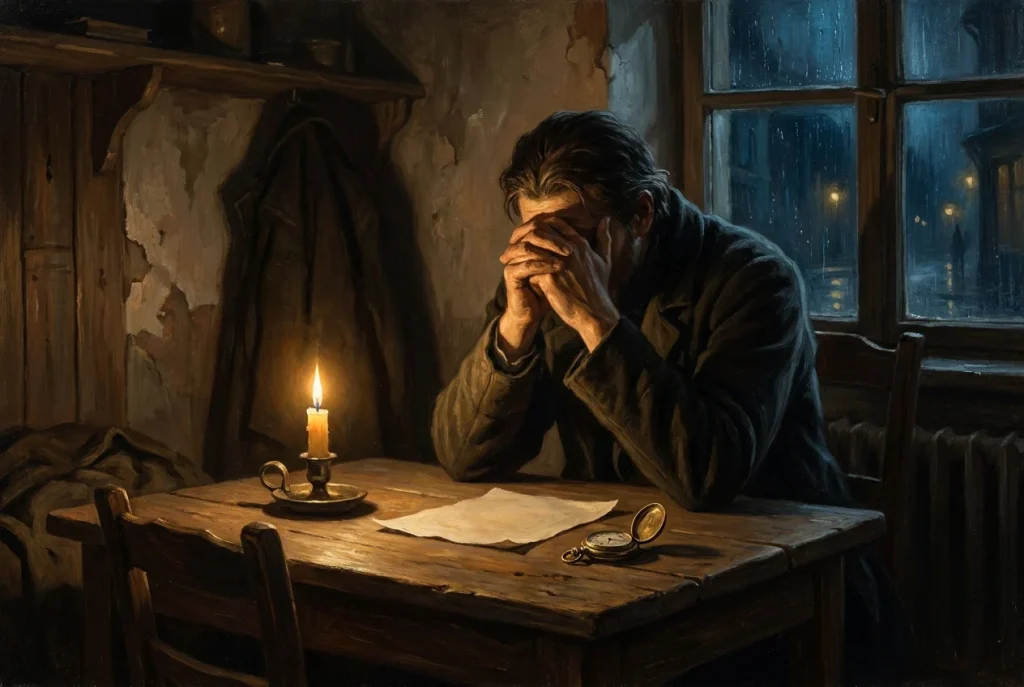
There are men we believe we know because we grew up beside them. We ate at their table, slept under their roof, heard their breathing in the silence of the night. And yet, a day comes — often too late — when we realize we never truly looked at them.
My father was one of those men.
The person he was before he became my father
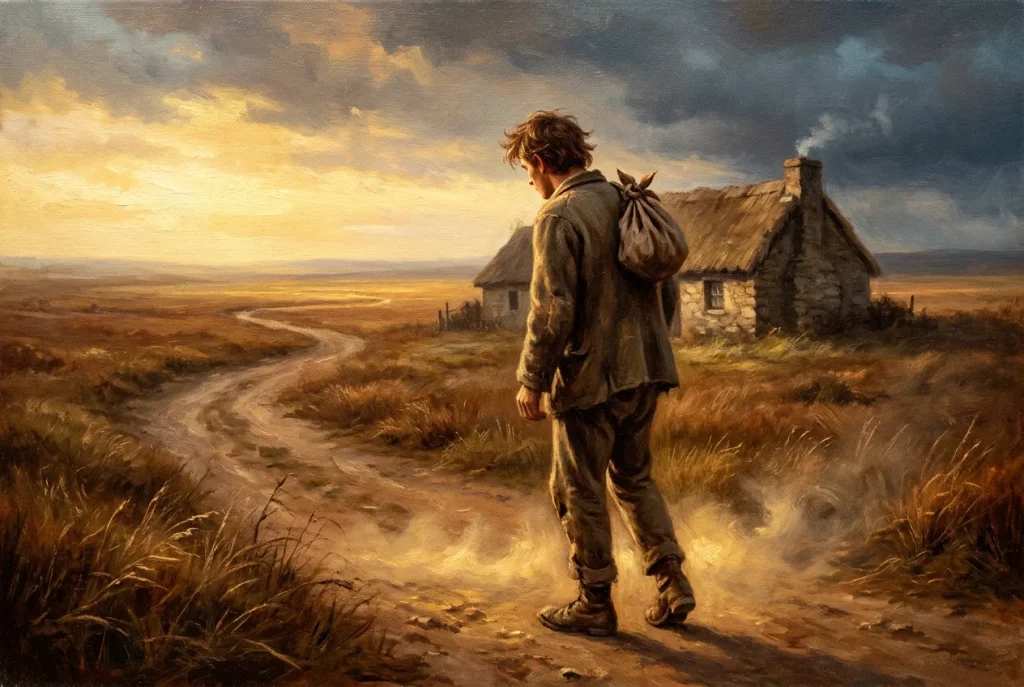
He was born into poverty — plain, unvarnished poverty, the kind that belongs to people who work the land not by choice but by necessity, who raise their animals not out of pastoral love but because without them, there is nothing to eat. He had no golden youth, no books, no leisure. His youth was the dawn over the fields, hands in the earth, and in the evening, the exhausted silence of a man who has given everything he had to give.
Then one day, like thousands of men whom fate tears from their roots, he left. He abandoned his land, his people, his habits — that narrow but familiar life — to try elsewhere what drought and poverty had denied him here. He left with nothing but that quiet conviction that the future belongs to those who dare walk toward it.
He worked. God knows how he worked. With his hands, his back, his sweat. The work of a builder — one of those who constructs houses for others without ever being able to rest in them. I never once heard him complain. Not once.
That was his first lesson. And I only understood it after his death.
The silent father
My father was not a man of words. He had not read Montaigne or Rousseau. He could not name his emotions with a philosopher’s precision. But he knew how to love — in his way, clumsy and immense, like those underground rivers whose current you cannot see but whose presence you feel in the coolness of the soil.
He was generous. Too much so, at times. He gave without counting, without calculating, without ever drawing up a list of what he should have kept for himself. People took advantage of him — as they always take advantage of souls too wide open. He knew it perhaps. He continued anyway.
What I did not know then was that this generosity was not naivety. It was his way of standing upright in a world that had not made things easy for him. To give was, for him, a way of existing. Of saying, without words: I am here, I matter, I contribute to the common edifice.
The fifteen days
There is something I have never told anyone. Or rather — something I have carried for years with the heavy discretion of shame.
The summer of his death, I was a few kilometers from his home. Five kilometers. The distance of a walk, a ten-minute car ride. And for fifteen days, I did not go.
Not out of indifference. Not out of coldness. But out of that stupid and criminal certainty that the living sometimes have — the certainty that the people we love will still be there tomorrow. That time belongs to us. That nothing is urgent.
It was a close presence, more clear-sighted than me that evening, who insisted. Each day, with that gentle and stubborn patience of those who see what others refuse to look at. Let’s go see your father. And every day, I put off until tomorrow what I had no reason to delay.
It was only after fifteen days that I finally said to myself: what am I waiting for?
The last time
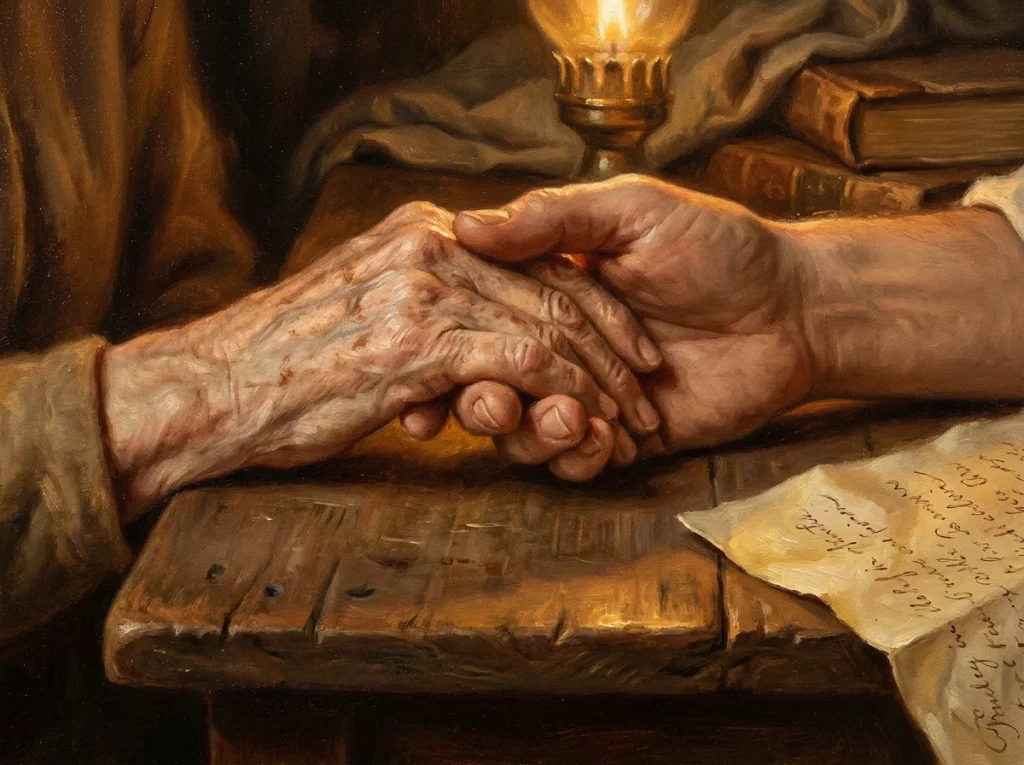
When I saw him that evening, he was sitting in a large armchair, his legs too swollen to carry him. My father — that man who had crossed continents, who had lifted stones and carried loads others refused — could no longer walk.
I lifted him in my arms. Like you lift a child. Like you carry what is precious and fragile. And it was there, in that gesture, that I felt for the first time the vertigo of reversed roles — that moment when the child becomes the father of his father.
He looked at me with eyes I had never seen on his face before. Peaceful eyes. And he kept repeating, to us both, words I will not translate here because some languages carry truths that other tongues can only approach — words that meant, in essence: may heaven be satisfied with you.
It was his blessing. I did not yet know it was his farewell.
I promised to come back the next day. I kissed his hand. I kissed his forehead. And I went home, reassured, like someone who believes they have time.
Two hours later, he was gone.
What I understood in the cemetery
The next day, in that cemetery where burials followed one another without interruption — because death, for its part, takes no pause — I understood something that twenty years of ordinary life had not taught me.
The house. The fine car. The projects, the ambitions, the possessions. All of it had evaporated in seconds, like those morning mists the sun erases without effort. Before the open earth, none of it carried any weight.
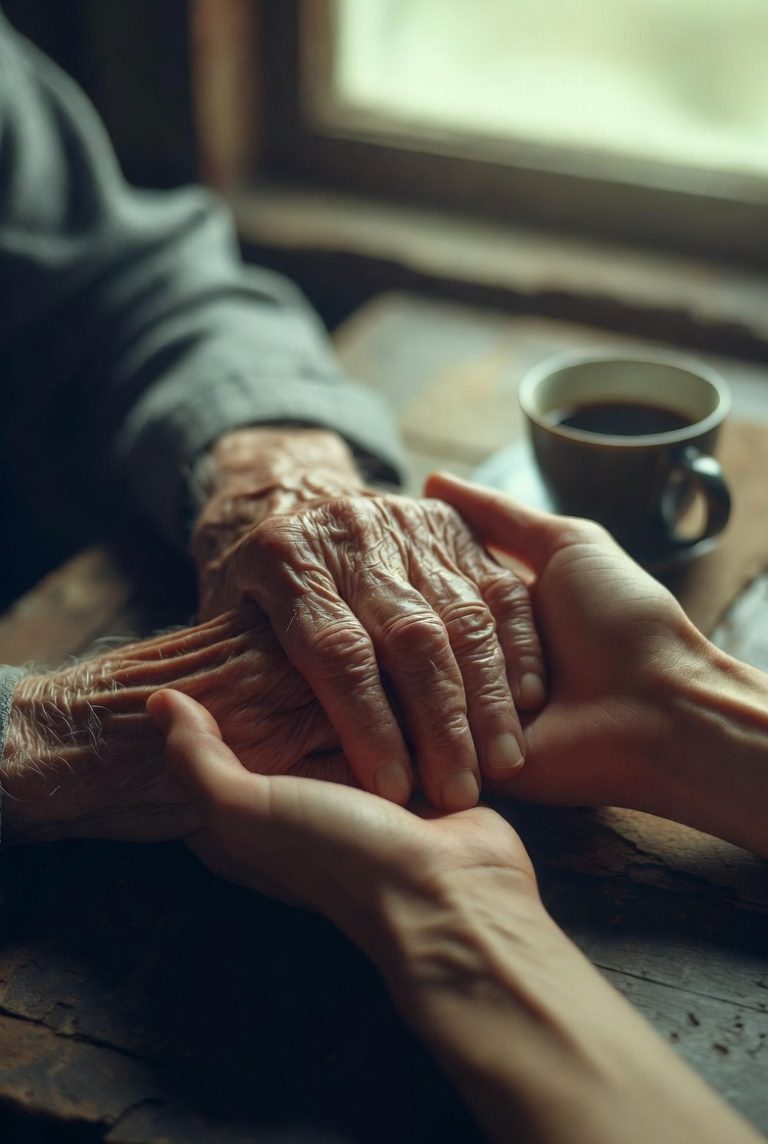
What remained — what alone resisted the trial of that moment — were the faces. The hands held. The words shared. The meals taken together. The companionable silences. The car journeys whose value you only realize once they are over forever.
My father had transmitted all of this to me. Not by lecturing me. Not by writing me letters or delivering speeches. But by living as he lived — with that quiet dignity, that instinctive generosity, that capacity to cross adversity without complaining and without bending.
I had not seen it. I had been looking elsewhere.
What I owe him
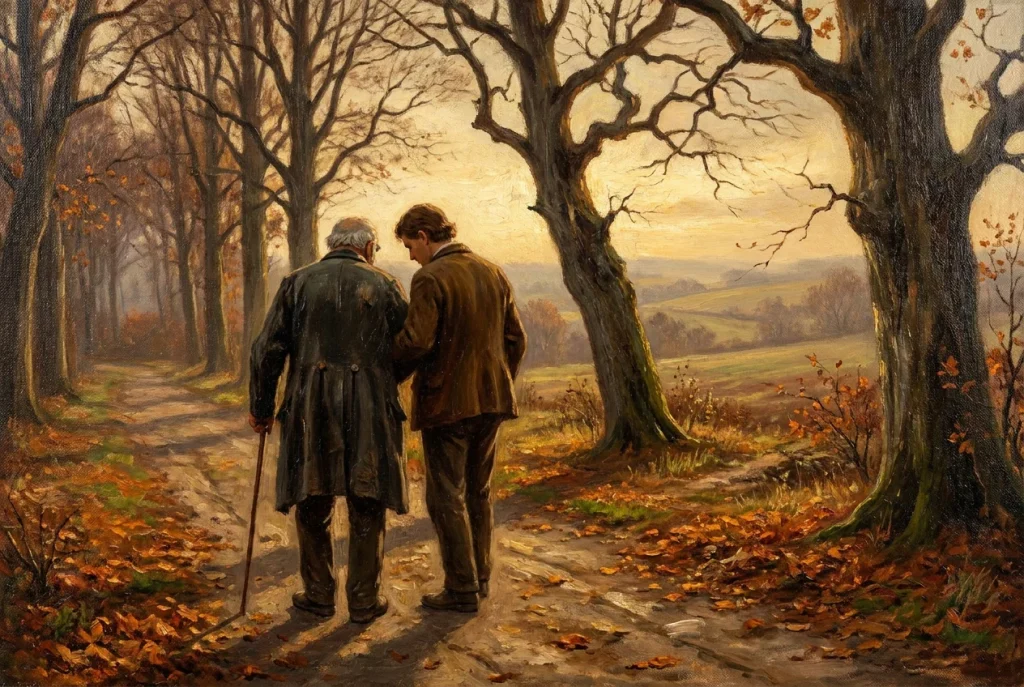
Today, years later, I think of him differently. No longer with the burning guilt of the first years — but with that gentle, almost tender sadness of one who understood late, but who understood.
If I could speak to him now, I would not say grand things. I would invite him to walk with me. I would ask him to tell me about his youth — those years I never knew, those pains he never named, those dreams he sacrificed without ever showing them to me. I would ask the questions I never asked. And I would listen, this time. Really.
But he is no longer here to answer.
That is why I write. That is why these journals exist.
Because somewhere, right now, there is a son or a daughter living through their own fifteen days. Putting things off until tomorrow. Believing they have time.
To that person, I simply want to say this:
The right moment is now. Not tomorrow. Not after the work is done. Not once life has settled down. Now — while they are still there to receive what you have to give them.
The words you have been carrying for years deserve to exist. Write them. Say them. Give them.
Before it is too late.
— Zara Lumis
If these words resonated with you, the journal “Dad, Thank You for Being There” was created to help you say what you have never dared to write.